David HaMelech Boulevard, Tel Aviv: Quiet Luxury and Investment Prestige
David HaMelech Boulevard stands as one of the most compelling and prestigious residential strips in the Tel Aviv real estate landscape. In contrast to the city’s heavily trafficked arteries or busy commercial promenades, this street offers a serene living environment that merges historical architecture with exacting modern standards. For buyers and investors, the area represents a stable anchor of real estate value, supported by an irreplaceable strategic location. Below, we examine the market trends, infrastructure, and local dynamics that make this boulevard a preferred destination for high-end living and investment.
Geographic Points of Interest and Urban Connectivity
The value of a premium property is determined not only by its interior specifications but by the urban fabric that surrounds it. David HaMelech Boulevard benefits from a location that provides rapid pedestrian access to Tel Aviv’s primary cultural and civic hubs, acting as a major catalyst for demand.
Rabin Square is situated merely three hundred and fifty meters away, translating to a flat, four-minute walk from the center of the boulevard. This proximity grants residents immediate access to the civic core without bearing the noise footprint of mass gatherings. To the east, approximately six hundred meters away (a seven to eight-minute walk), lies the city’s premier cultural complex, housing the Tel Aviv Museum of Art and the Performing Arts Center. Furthermore, the Ichilov Medical Center complex is located about eight hundred and fifty meters away. This specific metric appeals strongly to senior medical professionals and their families seeking luxury housing close to their workplace. This clustering of civic, cultural, and medical institutions creates an optimal service envelope within walking distance.
Market Trends, Architecture, and Preservation
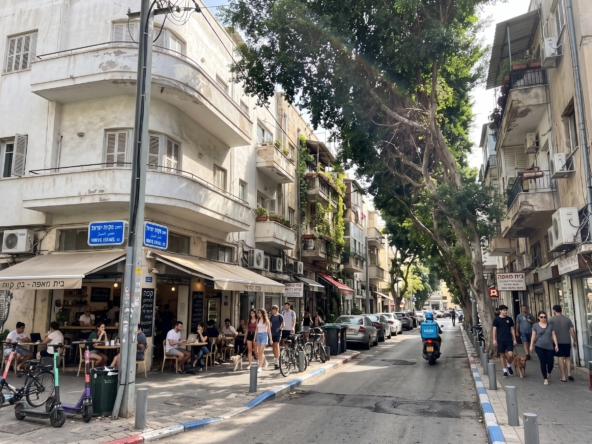
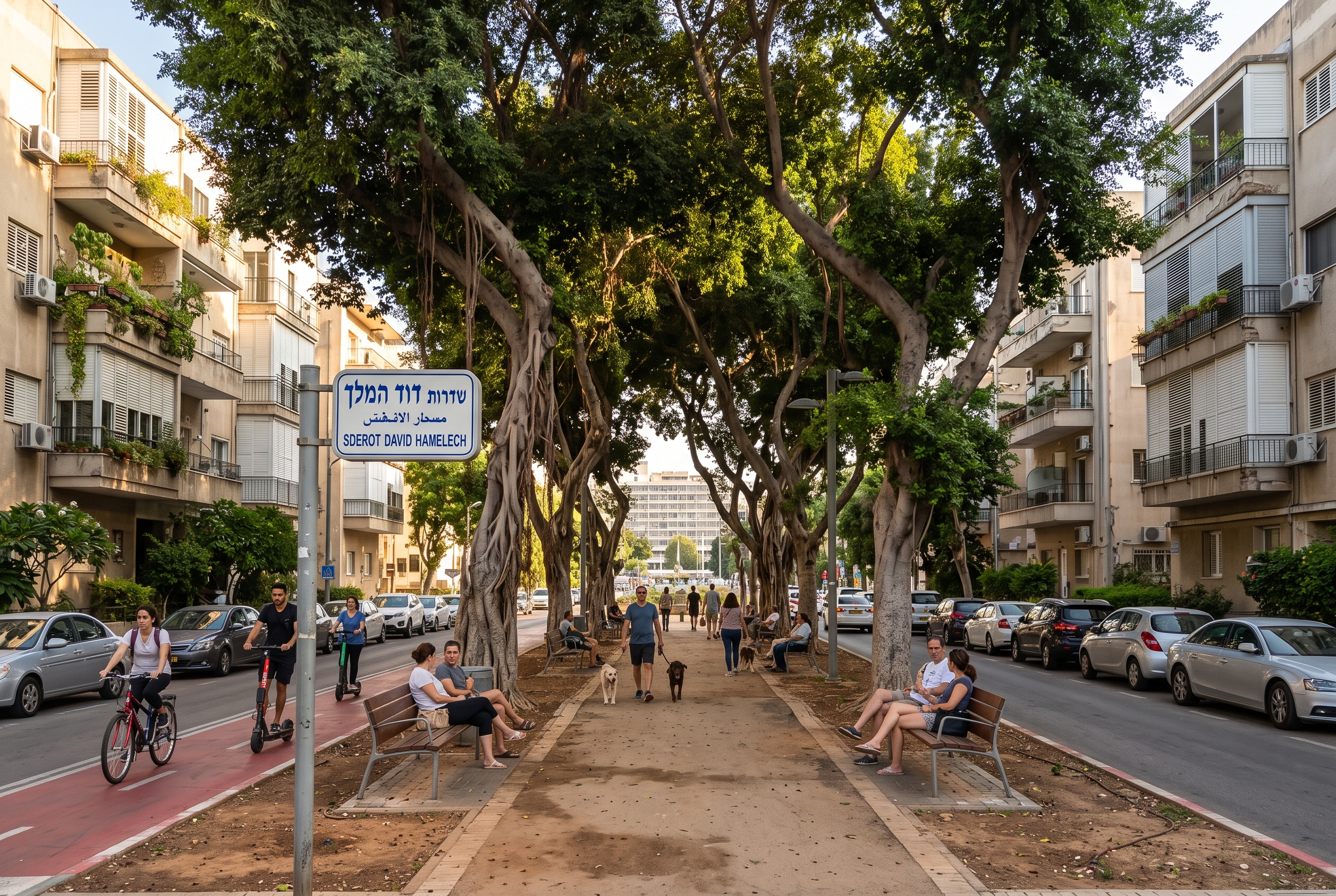
The architectural texture along David HaMelech Boulevard is characterized by a blend of historical structures—many subject to strict municipal preservation guidelines—alongside buildings that have undergone comprehensive urban renewal. The city’s preservation directives ensure that the classic character of the boulevard remains intact, which inherently limits the supply of new inventory in the area. This constrained supply, met with rigid demand, creates a distinct real estate climate. Working with an experienced real estate agent in Israel is highly advised when navigating this specific micro-market. Properties in this zone typically feature expansive layouts, high ceilings, and balconies overlooking the mature trees lining the street.
Selecting a property in a designated preservation building requires a thorough understanding of municipal zoning laws. Engaging a knowledgeable real estate agent in Tel Aviv can clarify the critical differences between standard structures and those under strict preservation, factors that dramatically impact future renovation costs and property appreciation potential.
Demographic Profile of the Target Audience
The demographic drawn to David HaMelech Boulevard consists largely of individuals seeking an uncompromising quality of life. There is a prominent presence of established families, diplomats who value proximity to international institutions, and foreign residents looking for a quiet yet centrally located urban retreat. Additionally, there is a growing trend of local downsizers migrating from the affluent suburbs of the metropolitan area, trading large private homes for spacious luxury apartments in the city center. This demographic particularly appreciates the discretion and elegance of the boulevard, which offers a refined alternative to the louder, commercially dense sectors of the city. A professional realtor in Israel often finds that these buyers are highly focused and prepared to execute transactions swiftly when the right asset becomes available.
Impact of Future Infrastructure on Real Estate
One of the most significant growth engines for David HaMelech Boulevard and its intersecting streets is the development of the metropolitan mass transit system. The Green Line of the Light Rail, currently in advanced stages of construction along the adjacent Ibn Gabirol Street, will dramatically alter local connectivity. The planned stations along the Ibn Gabirol axis will provide residents with immediate access to a rapid transit network while maintaining a comfortable buffer from the noise of the primary transit corridor.
While the current construction phase generates short-term logistical challenges on main arteries, historical data indicates that properties located on quiet secondary streets within walking distance of light rail stations experience a surge in demand as the operational date approaches. This enhanced connectivity to employment hubs outside the city is projected to widen the pool of prospective luxury tenants and buyers.
Pros and Cons Analysis
Pros: Geographic Location: A strategic position that allows detachment from urban noise while maintaining a short walking distance to essential services and cultural landmarks. Investment Stability: The combination of limited supply and consistent demand makes the boulevard a highly defensive and stable investment channel. Environmental and Architectural Quality: A street rich in mature foliage with historical building facades that generate a unique, aesthetically pleasing living experience.
Cons: Parking Constraints: In many older buildings that have not yet undergone preservation or redevelopment processes, there is a significant lack of regulated parking solutions. Entry Barrier: The high demand and restricted inventory create a barrier to entry that filters out a substantial portion of potential investors. Surrounding Infrastructure Work: Although the street itself is quiet, vehicular access can be temporarily challenging due to the ongoing Light Rail construction on the peripheral roads.
Expert Advice for Property Owners
When preparing a property for sale in such a highly sought-after area, the initial presentation dictates the quality of interest generated. As one of the top real estate agencies in Israel, Concord Real Estate advises the following: Professional architectural photography: We do not settle for smartphone photography (since a phone cannot achieve the same results as professional photography and limits the photographer). Utilizing a professional architectural photographer for correct lighting and angles, to highlight the property’s advantages on real estate boards and make quality buyers want to visit physically.
Frequently Asked Questions for Investors and Buyers
Are there many new developments or urban renewal projects on David HaMelech Boulevard? Development activity exists but is primarily focused on boutique strengthening projects or the careful preservation of historical buildings. Due to the street’s character and municipal policies, large-scale residential towers are virtually non-existent, preserving the area’s intimacy.
How does the Light Rail construction on Ibn Gabirol affect the quality of life on the street? The boulevard itself is relatively shielded from the direct noise pollution of the excavations. However, residents do experience changes in traffic arrangements when accessing the street by car. Once completed, the proximity to the stations will be a massive asset, offering transit convenience without the noise penalty of living directly on a main axis.
Is this street suitable for families with children, or is it mostly for mature professionals? The street is exceptionally well-suited for families. The proximity to leading educational institutions, coupled with comfortable pedestrian access to public parks, playgrounds, and the open urban space of Rabin Square, makes it an ideal destination for families seeking a safe and quiet urban environment.
To schedule a consultation, property valuation, or a property tour with Concord Real Estate, led by CEO Guy Gidon (Frishman 21, Tel Aviv), contact us at: +972 50-999-0402.