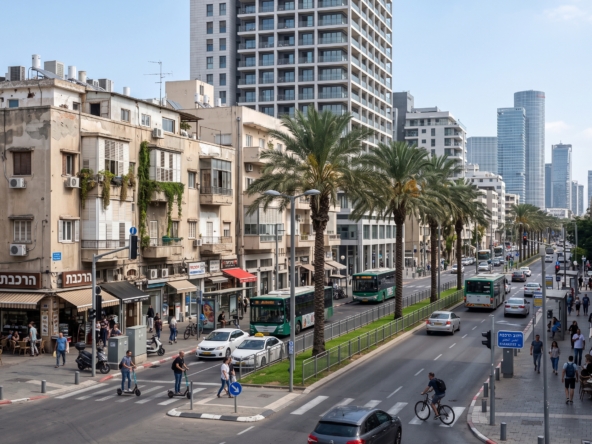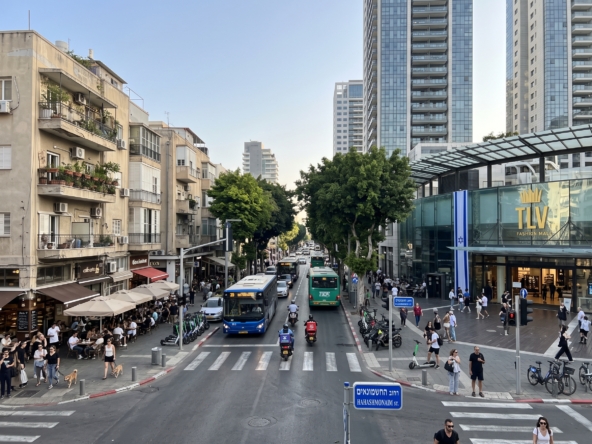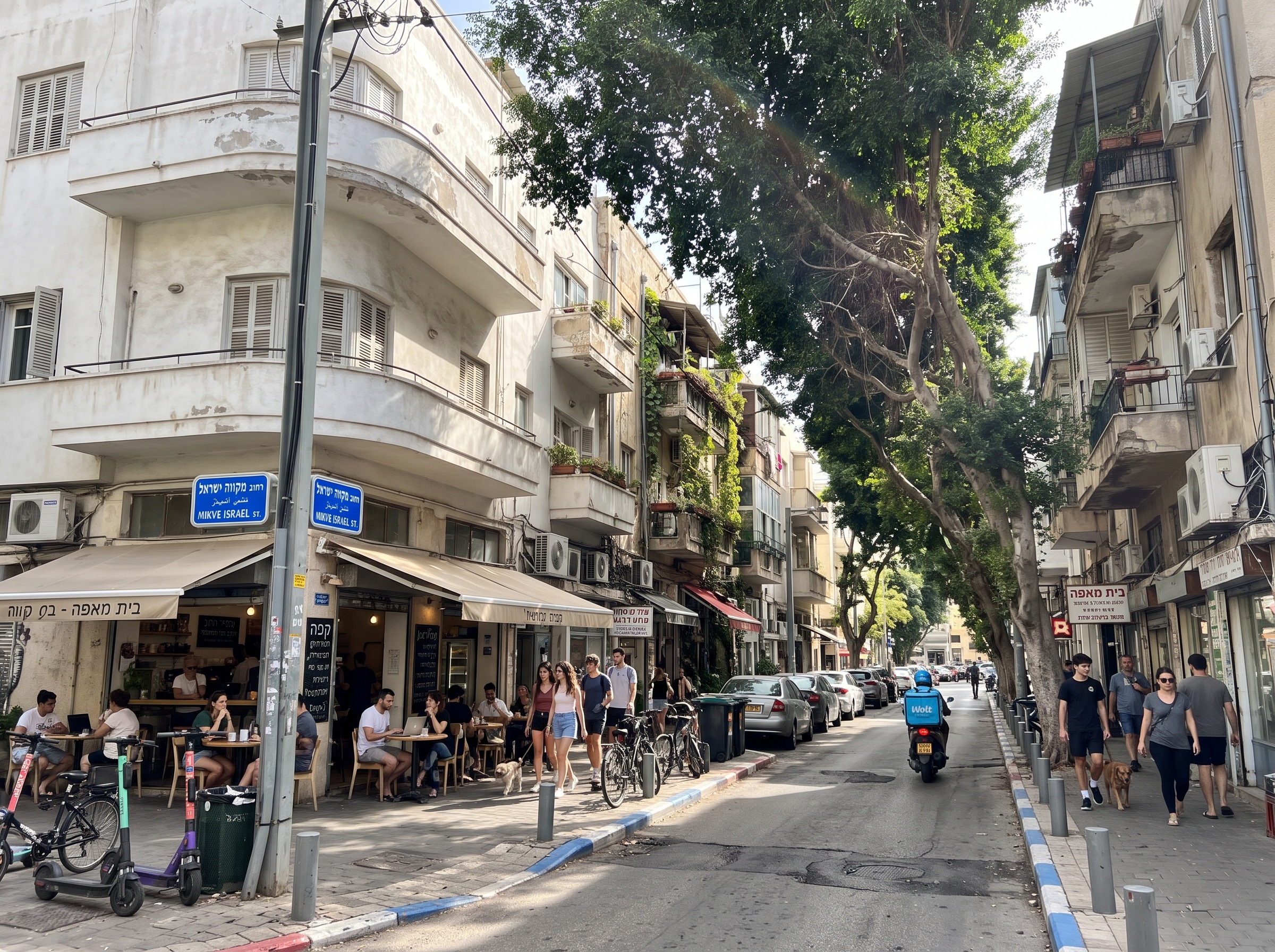
In our decade of navigating Tel Aviv’s property market, we’ve consistently seen Mikveh Israel Street evolve from a commercial thoroughfare into a strategic stronghold for experienced buyers. For any real estate agent in Israel analyzing the city’s historical core, the transformation is clear: this area masterfully blends strict historic preservation with rapid infrastructural modernization, creating a resilient anchor in a highly competitive landscape.
At a Glance
| Target Demographic | Premium Investors & Upgraders |
| Area Vibe | Revitalized Historic Urbanism |
| Walkability | High |
| Closest Major Landmark | Gan Hahashmal & Allenby Station |
Strategic Infrastructure and Market Dynamics
The spatial metrics of this location are undeniably strong. Situated just 400 meters from the Allenby Light Rail station (Red Line) and a 5-minute walk to the renowned Rothschild Boulevard, the street offers peerless connectivity. The activation of mass transit systems creates a rigid floor for demand, insulating property values from short-term economic fluctuations. The demographic drawn to this sector heavily values independence from private vehicles.
Architecturally, the street is defined by Bauhaus and Eclectic buildings. Standard urban renewal initiatives like Tama 38 or Pinui Binui are rare here due to rigorous conservation laws. The severe lack of new land reserves, coupled with strict preservation requirements, naturally caps supply and safeguards long-term asset value. Any realtor in Israel operating in this tier knows that this restricted supply transforms every fully restored residential space into a highly sought-after commodity.
Legal Registration and Measurement Gaps
Acquiring property in a historic zone demands rigorous legal oversight. Over the decades, many buildings transitioned from commercial to residential use. A meticulous review of the Tabu registration is mandatory to ensure the residential zoning is formally updated and free from unforeseen preservation restrictions. Every top real estate agent in Tel Aviv understands that a clean legal standing dictates the true viability of the investment.
Equally critical is the physical data of the asset. Accurate measurement (Gross/Pladelet vs. Net/Tabu): It is imperative to emphasize that the real estate market in Israel is priced and operates according to gross area (known as “Pladelet area” – the net living space plus walls, but excluding shared spaces like stairwells). Most sellers make a terrible mistake and advertise the property according to the Tabu or Arnona registration, which present an area significantly smaller than the true size of the apartment! We at Concord Real Estate physically measure every property in advance to present the true and full size (gross), thereby maximizing the property’s value for the seller and preventing the loss of buyers who filtered out the listing because they thought it was too “small”. It is this depth of analytical precision that separates top real estate agencies in Israel from the rest of the market.
Frequently Asked Questions
How does the Light Rail impact pricing in this specific area?
The immediate proximity to the Allenby station dramatically enhances connectivity, turning the street into a magnet for affluent buyers and ensuring a stable, long-term trajectory for demand.
Why are standard urban renewal projects uncommon here?
The historic nature of the neighborhood mandates strict adherence to preservation standards, meaning most developments require costly, meticulous restoration rather than conventional demolition and rebuilding.
Why is reviewing the Tabu registration so crucial for these buildings?
Many historical structures were originally commercial spaces. A deep Tabu inspection guarantees that the zoning is correctly updated to residential and that all rights are free from undocumented preservation constraints.
To schedule a consultation, property valuation, or a property tour with Concord Real Estate, led by CEO Guy Gidon (Frishman 21, Tel Aviv), contact us at: +972 50-999-0402.