Ben Zion Boulevard, Tel Aviv: The Architectural and Investment Core of the White City
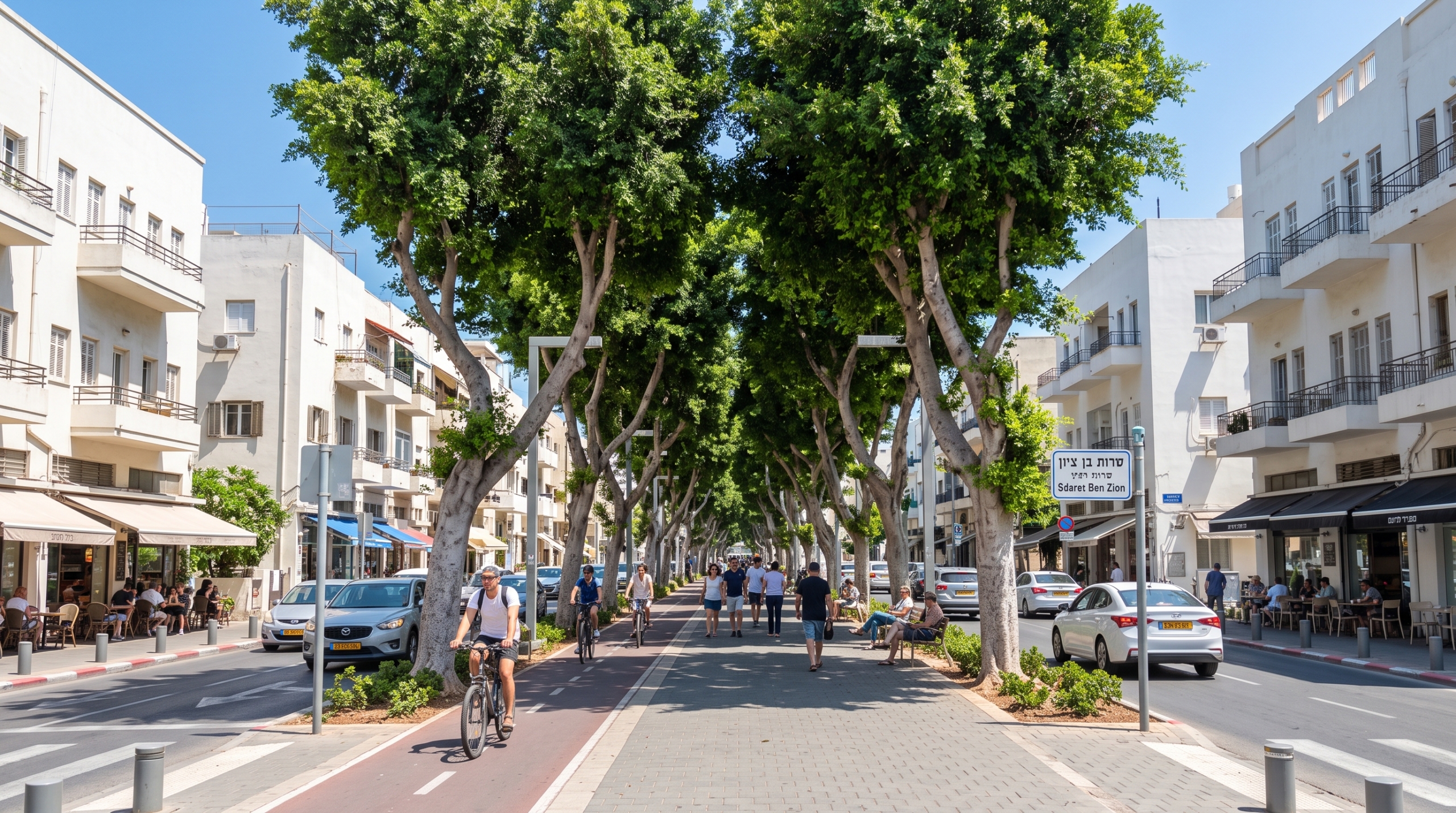
Ben Zion Boulevard stands as one of the most architecturally significant and consistently sought-after residential arteries in central Tel Aviv. Stretching roughly 450 meters from Habima Square down to King George Street, this tree-lined avenue offers a distinct synthesis of strict architectural preservation, regulated boutique commerce, and prime residential living. Unlike neighboring commercial thoroughfares that experience heavy pedestrian congestion throughout the night, the boulevard maintains a balanced residential atmosphere thanks to its elevated central pedestrian promenade, mature ficus trees, and immediate proximity to the city’s primary cultural institutions.
For prospective buyers, long-term investors, and current property owners, Ben Zion Boulevard represents a textbook example of inelastic supply meeting sustained demand. Its precise geographical positioning provides immediate pedestrian access to central Tel Aviv landmarks. At the eastern crest of the boulevard sit the Habima National Theatre, the Charles Bronfman Auditorium, and the historic Jacob Garden, all located within a 2-minute walk from most residential entrances along the street. At its western base, the boulevard leads directly into the Dizengoff Center commercial complex, situated just 150 meters past the King George Street intersection. Furthermore, the expansive Meir Park lies approximately 400 meters south of the boulevard, offering residents a substantial green lung within a 5-minute walk.
Architectural Heritage and Its Direct Impact on Property Value
Evaluating the real estate market on Ben Zion Boulevard requires an understanding of its urban planning history. Conceived in the late 1920s and 1930s as part of the Patrick Geddes master plan for Tel Aviv, the avenue was designed to link the city’s emerging cultural acropolis with its western residential neighborhoods. The vast majority of structures lining the boulevard were constructed in the International Style, commonly known as Bauhaus, and sit squarely within the UNESCO-designated White City conservation zone.
From a valuation and asset-management perspective, these strict municipal preservation mandates affect property dynamics in three primary ways:
Permanent Supply Scarcity: Unlike developing neighborhoods where older structures are demolished to make way for high-rise residential towers, vertical expansion on Ben Zion Boulevard is strictly capped. Rooftop additions and urban renewal projects operate under the stringent oversight of the municipal conservation department, ensuring that the total inventory of apartments on the boulevard remains highly restricted.
Superior Spatial Proportions: Original Bauhaus apartments along the boulevard feature interior proportions rarely replicated in contemporary construction. These include ceiling heights exceeding 3.2 meters, wide window apertures designed for cross-ventilation, curved balconies overlooking the tree canopy, and expansive living rooms.
Value Appreciation Through Restoration: Buildings on the boulevard that have undergone comprehensive structural restoration—including the integration of modern elevators, the excavation of underground robotic parking systems, and meticulous facade conservation—command a notable premium in the secondary market.
The immediate side streets feeding into or running parallel to the boulevard, such as Melchett Street, Ahad Ha’am Street, and Marmorek Street, form a complementary micro-market of quiet luxury buildings. Navigating the pricing nuances between a restored conservation building directly on the boulevard and a modern boutique project on an adjacent street requires localized market data. Engaging an experienced real estate agent in Tel Aviv allows buyers and sellers to accurately assess how factors like building conservation status, floor elevation, and acoustic insulation impact transaction values in this specific quadrant.
Demographic Profile of Buyers and Residents
Transaction records and buyer inquiries along Ben Zion Boulevard over the past decade reveal a highly defined demographic profile. Because of the entry barriers and architectural nature of the housing stock, the street does not experience the high tenant turnover or student-housing density seen in other parts of the city. Instead, the resident base is anchored by affluent, long-term end users.
Domestic Downsizers and Affluent Empty Nesters
A substantial segment of buyers on Ben Zion Boulevard consists of established Israeli couples in their fifties and sixties transitioning from private homes in suburban enclaves like Herzliya Pituach, Ramat Hasharon, or northern Tel Aviv neighborhoods. These buyers prioritize single-level living in spacious apartments equipped with elevator access and dedicated parking, situated within walking distance of theaters, concert halls, and fine dining. For this demographic, stepping out of their building lobby directly onto a manicured, historic boulevard is a primary lifestyle driver.
Senior Executives and Liberal Professionals
The seamless connectivity to Rothschild Boulevard—which begins immediately across Habima Square—makes Ben Zion Boulevard a natural residential choice for senior tech executives, venture capitalists, attorneys, and architects working in the city’s financial and innovation districts. These buyers value the historical authenticity of the architecture and frequently commission high-end interior renovations that blend modern smart-home infrastructure with classic International Style aesthetics.
International Investors and Foreign Residents
Foreign nationals from Western Europe, North America, and Australia consistently target Ben Zion Boulevard when seeking a secure capital hold or a secondary residence. The wide, tree-lined promenade and classic European proportions resonate strongly with international buyers accustomed to districts like the Marais in Paris or Eixample in Barcelona. Working with a knowledgeable realtor in Israel who understands cross-border transaction mechanics and local conservation laws is essential for overseas buyers aiming to acquire turnkey penthouses or large lateral apartments along this corridor.
Infrastructure Developments and Future Urban Mobility
A critical factor underpinning the long-term investment thesis for Ben Zion Boulevard is the ongoing transformation of Tel Aviv’s mass transit network. The boulevard occupies a strategic sweet spot: it is close enough to major transit hubs to benefit from maximum metropolitan connectivity, yet physically buffered from the construction noise and congestion of the main transit corridors themselves.
Currently, the Allenby station of the operational Red Line light rail sits approximately 900 meters away, translating to a flat 10-minute walk down Rothschild Boulevard. Looking ahead, the upcoming Purple Line light rail—which will run along King George Street and Allenby Street—will establish a transit stop less than 300 meters from the western end of Ben Zion Boulevard. Additionally, the planned Tel Aviv Metro network includes a major interchange hub in the Habima and Dizengoff vicinity. Once completed, residents will have rapid underground transit access to the entire metropolitan region and Ben Gurion Airport.
Simultaneously, the municipality is advancing streetscape upgrades along neighboring King George Street and Dizengoff Street. These initiatives involve widening pedestrian sidewalks, prioritizing public transit lanes, and expanding the dedicated cycling network that connects directly to the central bike path running through Ben Zion Boulevard. When consulting a real estate agent in Israel regarding long-term capital appreciation, these infrastructure milestones are viewed as primary catalysts that will reduce vehicular congestion at the boulevard’s intersections while elevating pedestrian quality of life.
Objective Pros and Cons of Living and Investing on Ben Zion Boulevard
To make an informed acquisition or disposition decision, buyers and investors must weigh the distinct advantages of the boulevard against the practical realities of owning property in a historic urban center.
Key Advantages
Unmatched Centrality: Direct pedestrian linkage between Rothschild Boulevard, Habima Square, and the Dizengoff commercial corridor provides immediate access to cultural, culinary, and daily retail amenities.
Acoustic and Visual Buffering: The generous setback between the northern and southern building facades, separated by the elevated central promenade and dense tree canopy, creates a sense of openness and privacy rare for central Tel Aviv.
Resilient Capital Preservation: Prime real estate along Tel Aviv’s historic boulevards has historically demonstrated low volatility during broader economic downturns, supported by strict supply constraints and high net-worth demand.
Architectural Distinction: High ceilings, abundant natural light, and classic Bauhaus layouts offer superior interior volume compared to standard modern apartments.
Practical Challenges
Parking Constraints in Unrenovated Buildings: Original 1930s buildings that have not undergone structural preservation and underground excavation lack private parking. Securing on-street parking in the evening hours within this zone is exceptionally difficult.
Elevated Maintenance and Conservation Costs: Owning a property in a designated conservation building requires ongoing financial commitment from the homeowners association to maintain exterior facades and common areas according to municipal standards.
Perimeter Traffic Congestion: While the boulevard itself experiences moderate traffic flow, exiting the area by private vehicle via King George Street or Tarsat Boulevard during peak commute hours involves significant delays.
Regulatory Rigor for Renovations: Altering exterior elements—and in some strict conservation cases, specific interior architectural features—requires navigating municipal heritage committees and obtaining specialized permits.
Strategic Marketing for High-End Properties on the Boulevard
Selling a luxury apartment or historic property on Ben Zion Boulevard requires a markedly different approach than marketing a standard residential unit in a suburban tower. Affluent buyers operating in this bracket are highly analytical, often represented by legal and architectural advisors, and evaluate properties with a critical eye. While top real estate agencies in Israel offer broad market exposure, achieving an optimal sale price in the White City demands precise, asset-specific presentation.
At Concord Real Estate, our marketing protocol is engineered to highlight the exact architectural attributes that drive value in central Tel Aviv, recognizing that a buyer’s initial qualification of a property happens online. A core pillar of our listing preparation is professional architectural photography: we do not settle for smartphone photography (because a phone cannot achieve the same results as professional photography and limits the photographer). Using a professional architectural photographer for the right lighting and angles highlights the property’s advantages on listing platforms and compels high-quality buyers to visit physically. Capturing the true scale of 3.2-meter ceilings, the interplay of natural light across original terrazzo tiles, and the green views of the boulevard’s ficus canopy ensures that the property stands out immediately to discerning domestic and international buyers.
Frequently Asked Questions from Buyers and Investors
How does a building’s UNESCO conservation status affect my ability to remodel the interior of an apartment on Ben Zion Boulevard?
In the majority of buildings classified under standard municipal conservation on Ben Zion Boulevard, preservation restrictions apply strictly to the exterior envelope, structural facades, window profiles, balconies, and the communal stairwell. Within the private interior footprint of the apartment, owners are generally permitted to reconfigure non-load-bearing walls and modernize plumbing and electrical systems, subject to standard structural engineering approval. However, in select buildings designated for strict conservation, heritage preservation guidelines may extend to specific interior elements, such as original painted floor tiles or historic wooden shutters. Reviewing the specific municipal building file prior to signing a purchase agreement is essential.
What is the practical difference in living experience and asset value between the northern and southern sides of the boulevard?
Orientation plays a decisive role in Tel Aviv real estate valuation. Buildings situated on the northern side of Ben Zion Boulevard feature front facades that face directly south toward the tree-lined promenade. This southern exposure guarantees abundant, direct natural sunlight throughout the day, which is particularly desirable during the winter months. Conversely, apartments on the southern side of the street have front facades facing north toward the boulevard, offering softer, indirect light and cooler interior temperatures during the peak summer months, while their rear bedrooms face south. While individual buyer preferences vary, south-facing front apartments on the northern side of the boulevard typically command a slight market premium due to their superior illumination.
Is it structurally and legally feasible to add an elevator and underground parking to an older building on the boulevard?
Yes, it is feasible, provided the specific lot dimensions, building footprint, and structural foundations support the engineering requirements. Retrofitting an elevator is commonly achieved either by utilizing the central void of the existing Bauhaus stairwell or by attaching an external glass-and-steel shaft to the rear facade, subject to conservation committee approval. Integrating parking into existing historic buildings typically involves excavating beneath the structure or the rear courtyard to install an automated, underground mechanical parking system. Because these upgrades are capital-intensive, they are almost universally executed as part of a comprehensive building-wide preservation and rooftop-addition project agreed upon by the majority of the building’s homeowners.
To schedule a consultation, property valuation, or a property tour with Concord Real Estate, led by CEO Guy Gidon (Frishman 21, Tel Aviv), contact us at: +972 50-999-0402.