Shaul HaMelech Boulevard, Tel Aviv: Why the City’s Cultural and Judicial Spine is Commanding Prime Real Estate Attention
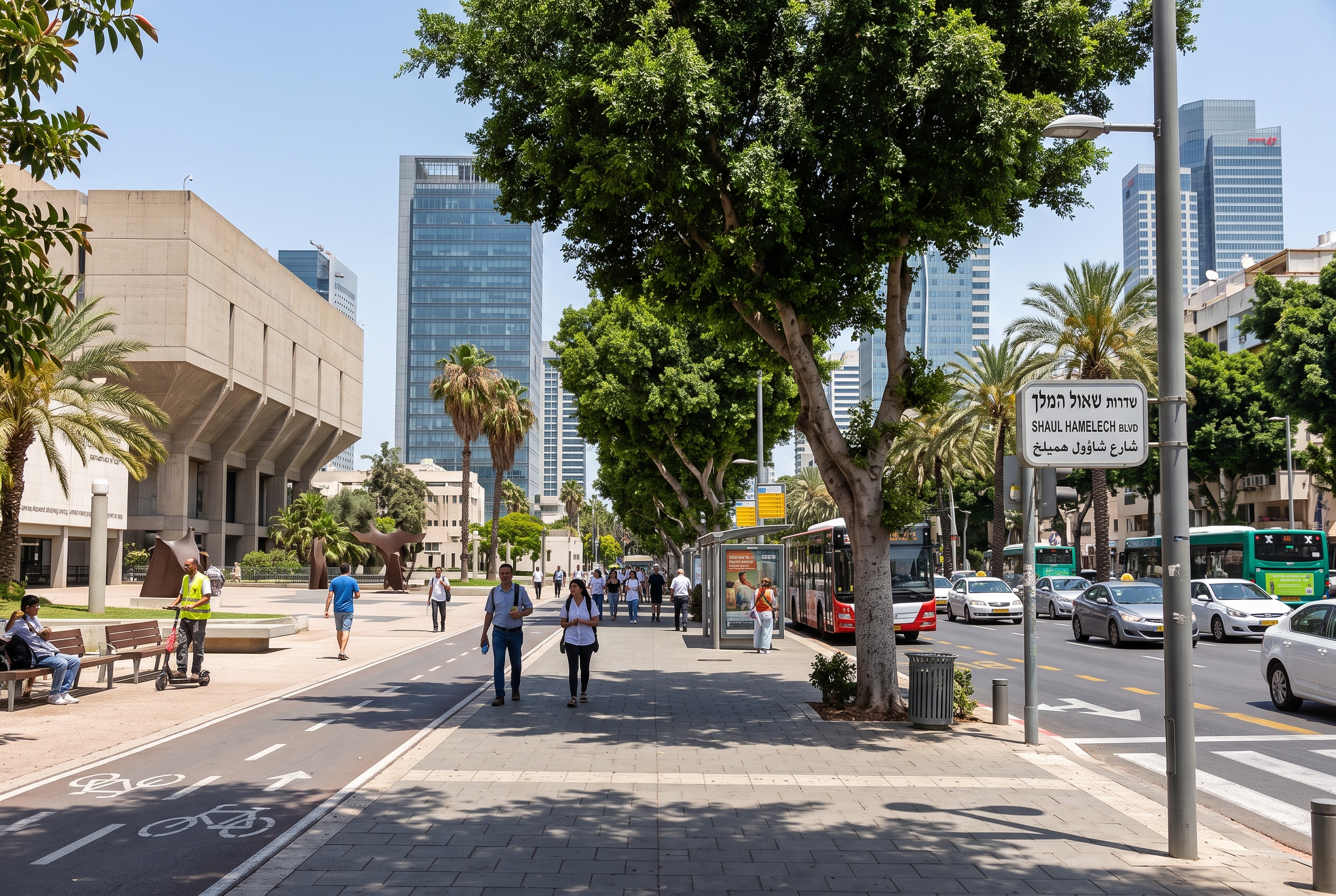
Shaul HaMelech Boulevard functions as one of the most strategically significant east-west arteries in Tel Aviv. Stretching from Ibn Gabirol Street in the west to Menachem Begin Road in the east, this corridor has undergone a structural real estate shift over the past decade. Historically defined almost exclusively by brutalist government complexes, judicial institutions, and commercial office towers, the boulevard has evolved into a prime mixed-use zone integrating high-end residential living.
The geographic positioning of the boulevard provides an immediate spatial advantage in the local housing market. Along its southern perimeter, the avenue borders some of the quietest, most established residential streets in the city center, including Dubnov, Huberman, Zeitlin, and Shlomo HaMelech.
For property buyers and investors, this translates into verifiable, immediate proximity to Israel’s premier cultural and commercial anchors. The Tel Aviv Museum of Art and the Performing Arts Center (home to the Israeli Opera and the Cameri Theater) sit directly on the boulevard, located less than 100 meters from the residential buildings lining the central stretch. To the west, Habima Square and the historic Jacob Garden are approximately 450 meters away, equating to a flat 5-minute walk. Toward the eastern section, the landscaped culinary and retail hub of Sarona Park sits roughly 300 meters south of the boulevard, a 4-minute walk. Residents can access major metropolitan institutions within minutes while retreating to tree-lined cul-de-sacs like Dubnov Street just 150 meters to the south.
Architectural Evolution and Luxury Residential Standards
The architectural narrative of Shaul HaMelech Boulevard reflects Tel Aviv’s broader transition from a functional modernist city into a dense, vertically integrated metropolis. For decades, the streetscape was dominated by large-scale civic architecture, such as the Tel Aviv Courthouse and Beit Hadar Dafna. From a purely residential real estate perspective, the presence of these low-to-mid-rise public plazas and institutional compounds offers a distinct advantage: they permanently preserve open sightlines, ensuring that high-floor apartments along the corridor maintain unobstructed views and natural light.
Recent urban zoning amendments have prioritized high-density, mixed-use developments along major transit corridors. Consequently, the residential inventory on and immediately adjacent to Shaul HaMelech Boulevard consists of modern luxury high-rises and meticulously executed boutique buildings.
Buyers working with a knowledgeable real estate agent in Tel Aviv typically evaluate two distinct property profiles in this micro-market:
-
High-Rise Luxury Towers: Situated directly on the boulevard or at key intersections, offering 24/7 concierge services, underground robotic or conventional parking, fitness facilities, and advanced curtain-wall glazing.
-
Quiet Side-Street Boutique Buildings: Located 100 to 300 meters off the main artery on streets like Dubnov or Mane, offering lower density, classic Tel Aviv architectural proportions, and a quieter residential pace.
Infrastructure Impact: The Light Rail and Future Metro Network
Evaluating long-term capital appreciation along Shaul HaMelech Boulevard requires an analysis of Tel Aviv’s transit infrastructure. The avenue is a primary nexus for both active and planned mass transit systems.
Currently, the Shaul HaMelech underground station of the Red Line Light Rail operates at the eastern end of the boulevard, approximately 150 meters west of the Menachem Begin intersection. Furthermore, the Hashalom Heavy Rail Station is roughly 500 meters away (a 6-minute walk), providing direct train access to Ben Gurion Airport and Jerusalem. This operational infrastructure has already solidified rental and purchase demand among professionals who prioritize transit connectivity over vehicle ownership.
Looking ahead, the planned Tel Aviv Metro network (specifically the M1 and M2 lines) designates the Shaul HaMelech corridor as a central interchange hub. While major infrastructure construction inevitably introduces temporary logistical friction near specific excavation sites, global and local market data consistently demonstrate that properties situated within a 200-to-500-meter radius of underground transit hubs outperform the broader market once operations commence. Any seasoned realtor in Israel analyzing long-term holds points to this transit convergence as a primary driver of future liquidity and asset resilience.
Demographic Profile of Buyers and Residents
The buyer pool targeting Shaul HaMelech Boulevard and its immediate neighboring streets is financially established and demographically distinct from the family-centric northern neighborhoods or the younger, bohemian southern quarters. The resident profile generally segments into three primary categories:
-
Affluent Local Downsizers: Couples aged 55 and older transitioning from large single-family homes in Herzliya Pituach, Saviyon, or northern Tel Aviv suburbs. They prioritize single-level floor plans, high security, elevator access, and the ability to walk to the philharmonic, theater, or fine dining within 5 minutes.
-
Senior Legal, Tech, and Financial Executives: Given the immediate proximity to the Tel Aviv Courthouse, government ministries, and the commercial skyscrapers of Menachem Begin Road, senior partners and executives purchase residences here to eliminate daily commuting altogether.
-
International Buyers and Diaspora Investors: Overseas purchasers seeking a secure, turnkey residence in the cultural heart of the city. When consulting a real estate agent in Israel, these buyers overwhelmingly favor buildings with professional management companies capable of maintaining the property during extended absences.
Expert Tip for Property Sellers in Prime Tel Aviv Corridors
When marketing a high-value property on Shaul HaMelech Boulevard or its adjacent quiet streets, relying solely on domestic listing portals limits your exposure to one of the most lucrative buyer segments in the market. At Concord Real Estate, we utilize over a decade of localized experience to position prime Tel Aviv assets directly in front of qualified global capital.
International exposure to foreign residents: active overseas marketing. We advertise our properties on leading international portals to directly reach an audience of investors, Diaspora Jews, and immigrants from the United States, France, and the United Kingdom, thereby dramatically increasing competition for the apartment. This client demographic is particularly important because these are mostly more affluent individuals who are also interested, due to the current global situation, in coming to Israel to have a kind of “safety net”; this is a very high-quality client base that the average person in Israel would have some difficulty reaching.
This targeted cross-border distribution is a primary reason property owners choose to partner with top real estate agencies in Israel, as generating competitive tension among international cash buyers consistently yields superior transaction terms.
Objective Pros and Cons of the Shaul HaMelech Micro-Market
A sound real estate acquisition requires weighing the tangible lifestyle and financial benefits against the inherent realities of living along a central metropolitan corridor.
The Advantages:
-
Unmatched Cultural Proximity: Direct, immediate access (1 to 5 minutes on foot) to the Tel Aviv Museum of Art, the Israeli Opera, Cameri Theater, Beit Ariela Library, and Habima Square.
-
Multi-Modal Transit Access: Immediate proximity to the operational Red Line Light Rail, Israel Railways at Hashalom, and rapid vehicular access to the Ayalon Highway (roughly 3 minutes by car).
-
High Asset Liquidity: The convergence of legal, financial, and cultural institutions ensures a permanent pool of high-income tenants and buyers, insulating properties from broader market volatility.
-
Modern Security Specifications: Newer developments along the corridor feature built-in reinforced security rooms (Mamad), backup generators, and 24/7 staffed lobbies.
The Drawbacks:
-
Arterial Traffic and Ambient Noise: Shaul HaMelech is a major vehicular thoroughfare. Lower-floor units facing directly onto the boulevard experience urban traffic noise, though modern triple-glazed acoustic windows effectively mitigate interior decibel levels.
-
Institutional Atmosphere at Night: The eastern section of the boulevard, dominated by office towers and government complexes, becomes relatively quiet and less neighborhood-oriented after business hours compared to streets like Dizengoff or Rothschild.
-
Substantial Building Maintenance Fees: Full-service luxury towers along the boulevard carry high monthly management fees due to round-the-clock security staffing, mechanical systems, and amenity upkeep.
Frequently Asked Questions (FAQ) for Buyers and Investors
1. How effectively do the luxury towers on Shaul HaMelech Boulevard block street noise?
Modern residential towers constructed along the boulevard adhere to strict acoustic engineering standards. Developers utilize heavy-duty curtain walls with double or triple laminated glazing separated by inert gas layers, which reduce exterior traffic noise to a virtually imperceptible level when windows are closed. Buyers who prefer enjoying open balconies in complete quiet typically target south-facing units overlooking the Dubnov neighborhood or apartments situated above the 15th floor.
2. From an investment standpoint, is it better to buy in a high-rise on the boulevard or a boutique building on Dubnov or Huberman Street?
Both asset classes perform well, but they serve different liquidity profiles. High-rise apartments on the boulevard are highly favored by foreign buyers and corporate executives who demand full-service amenities, underground parking, and panoramic views, making them exceptionally easy to lease or sell to the international market. Boutique apartments on Dubnov or Huberman command equal prestige due to their scarcity and quiet, green surroundings, appealing strongly to affluent local families and long-term domestic residents while incurring lower monthly maintenance costs.
3. Will future Metro construction disrupt property values along Shaul HaMelech Boulevard?
Because the Red Line Light Rail infrastructure along Shaul HaMelech is already fully constructed and operational, a major portion of the heavy transit work on the street itself is complete. While future Metro station integration will cause localized construction activity at specific intersections in the medium term, the long-term financial impact is decisively positive. Properties located at the intersection of multiple underground transit lines historically achieve the highest capital appreciation rates in metropolitan markets.
To schedule a consultation, property valuation, or a property tour with Concord Real Estate, led by CEO Guy Gidon (Frishman 21, Tel Aviv), contact us at: +972 50-999-0402.