Shabazi Street: The Historic Gem Turned Prime Real Estate Hotspot
The Neve Tzedek neighborhood has undergone vast transformations since its establishment in the late nineteenth century. Today, Shabazi Street—its main artery—stands at the absolute forefront of the local luxury market. The street’s transition from a historic pathway into an exclusive commercial and residential boulevard reflects a broader trend of urban renewal and high-end preservation. Investors and potential buyers examine this street not merely for its aesthetic value, but due to strong economic fundamentals, strictly constrained property supply, and rigid demand. Navigating these micro-market dynamics requires uncompromising professional analysis, which is precisely why engaging a knowledgeable real estate agent in Israel is essential.
Architecture, Preservation, and Supply Constraints
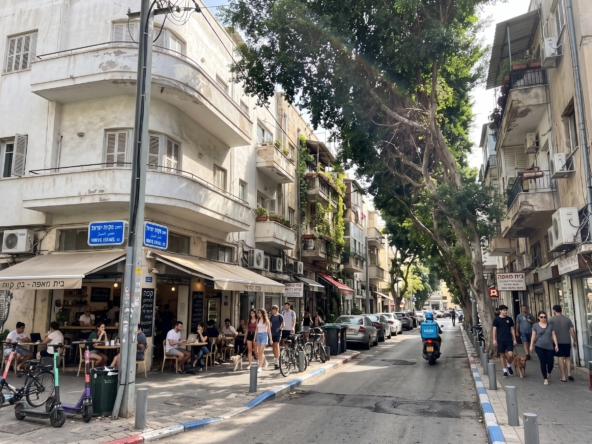
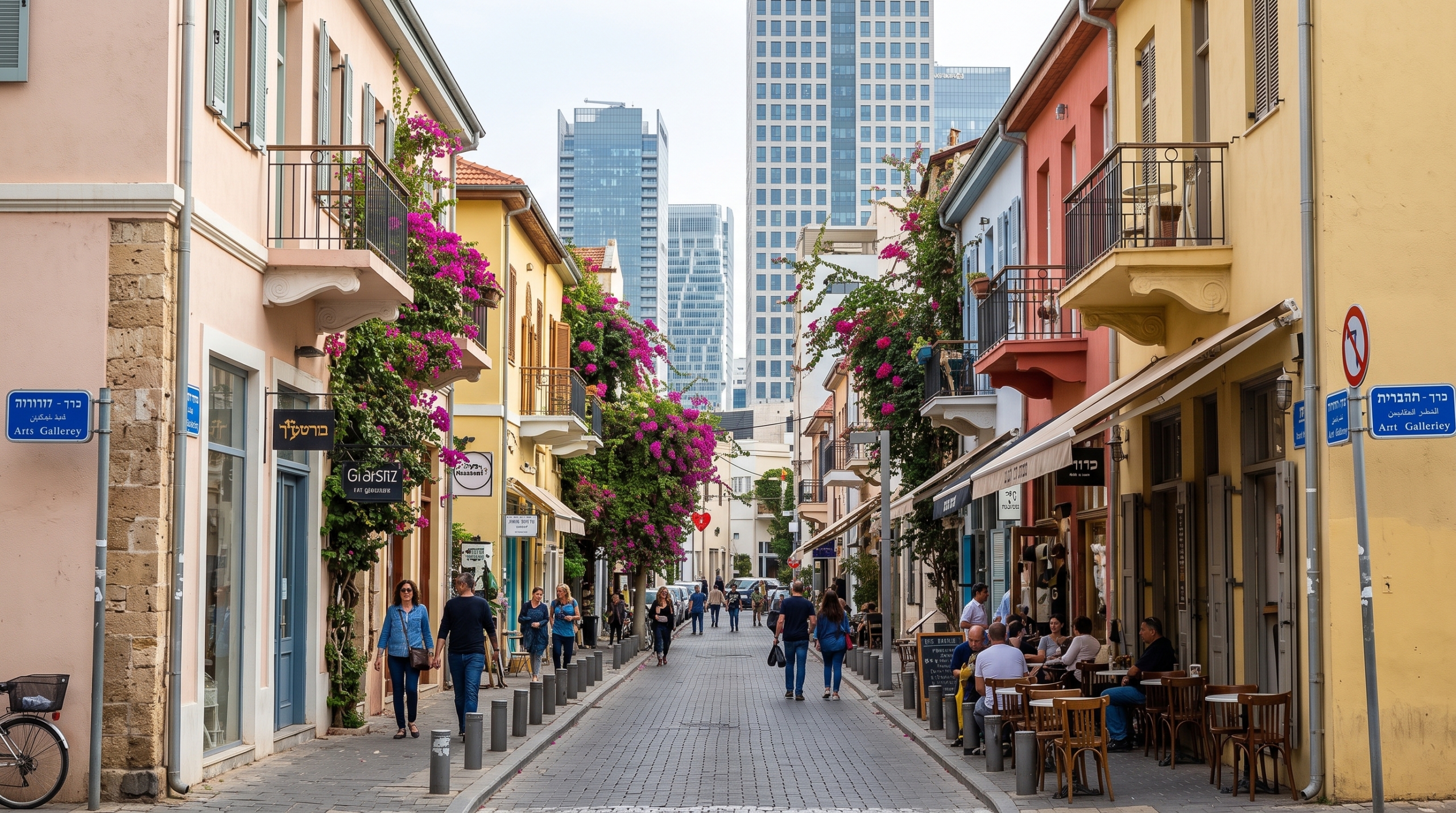
From a real estate perspective, the defining characteristic of Shabazi Street is the strict preservation status applied to the majority of its buildings. The architecture is defined by low-rise structures, typically two to three stories high, blending eclectic architectural elements with traditional Mediterranean design. The municipal conservation department strictly prohibits demolition and high-rise construction along the street’s perimeter, establishing an absolute glass ceiling on the supply of new inventory.
This supply constraint acts as the primary engine for property appreciation. While residential towers in other parts of the city inject hundreds of housing units into the market simultaneously, every property on Shabazi Street remains unique and unreplicable. Fully renovated assets that offer modern technical specifications behind a meticulously preserved historical facade command a significant premium—a trend well recognized by any seasoned real estate agent in Tel Aviv operating in the luxury tier.
Geographic Anchors and Walkability Metrics
The valuation of a property on Shabazi Street is directly derived from its surrounding urban fabric and exact distances to major points of interest. The street’s layout promotes a lifestyle built on total walkability:
Suzanne Dellal Centre for Dance and Theatre: Located roughly a 4-minute walk (approx. 300 meters) from the center of Shabazi Street. This cultural anchor attracts high-caliber demographics and directly elevates the desirability of adjacent properties.
HaTachana (The First Station) and Charles Clore Park: Situated just 600 meters (about a 7-minute walk) south of Shabazi, offering residents direct access to the Mediterranean coastline and the beach promenade—a critical metric for luxury buyers.
Rothschild Boulevard: Located 850 meters (a 10-minute walk) away. This provides a perfect spatial separation between the quiet residential core of Neve Tzedek and the bustling commercial and financial center of the city.
Future Infrastructure: The Light Rail Effect
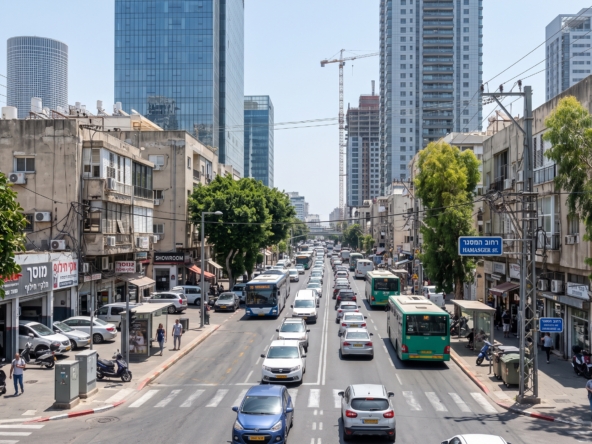
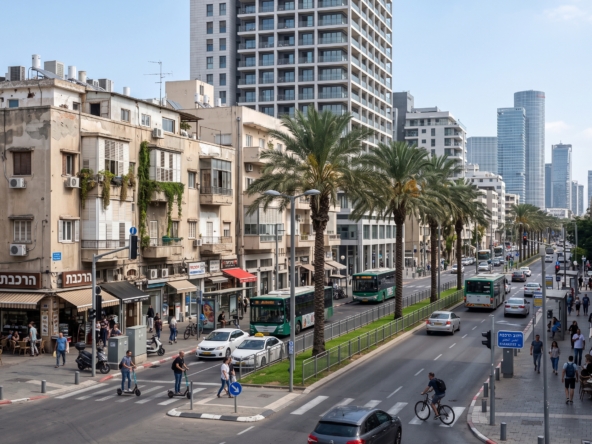
The launch of the Red Line light rail has drastically altered the accessibility map of Neve Tzedek. The Elifelet station, located a mere 400 meters from the southern tip of Shabazi Street, connects neighborhood residents to major employment hubs along the Yigal Alon corridor, the Ramat Gan Diamond Exchange, and reaching as far as Petah Tikva, with short, highly predictable commute times. This transit infrastructure resolves one of the neighborhood’s historical drawbacks—traffic isolation—making the street highly attractive to top executives who work on the city’s perimeter but wish to reside in its historic core.
The Demographic Profile of the Shabazi Buyer
The demographic makeup of Shabazi Street diverges significantly from other neighborhoods. The market is dominated by three main groups: foreign investors (primarily from Europe and the US) seeking classic European character in a Mediterranean climate; tech entrepreneurs and senior executives; and established families downsizing from suburban private homes in favor of a refined urban experience. These groups demand uncompromised finishing standards, maximum privacy, and exhibit a willingness to pay the required location premium. Any experienced realtor in Israel representing these buyers understands that their decision-making process bridges strict economic logic with aesthetic appreciation.
Investment Analysis: Pros vs. Cons
Living or investing on Shabazi Street necessitates an objective weighting of the data.
Pros:
Capital Preservation: Severe building restrictions ensure that inventory remains inelastic, shielding property values even during macroeconomic slowdowns.
Independent Commercial Ecosystem: The street offers a curated mix of boutique shops, galleries, and cafes, generating a vibrant community life without the need to leave the immediate neighborhood.
High Market Liquidity: Premium properties here benefit from relatively high liquidity within the luxury sector, driven by consistent international demand.
Cons:
Parking Shortages: The lack of subterranean parking solutions in most historical buildings presents a major daily challenge. Properties that include registered private parking are priced with a substantial markup.
Development Costs: Renovating a historic property requires adherence to stringent municipal standards, the use of specific materials, and complex permitting processes, all of which extend execution timelines and inflate construction costs.
Expert Strategy for Maximizing Valuation
Successfully managing or selling property in such a nuanced environment requires advanced methodologies. 3D renderings for property potential: A critical working tool of ours at Concord Real Estate, especially for older apartments in North Tel Aviv. We produce photo-realistic renderings that show the buyer exactly what the apartment will look like after a full renovation, removing their imagination barrier, and thereby maximizing the property value for the seller. Renderings are a critical matter for quite a few apartments that are in bad condition and need a facelift, as well as for new builder apartments when the house is empty without furniture and it is very difficult to see the property’s potential with the appropriate furniture; it is a very simple solution to a very big problem. This standard of service is what separates standard agencies from the top real estate agencies in Israel.
Frequently Asked Questions
Is buying property on Shabazi Street a secure investment long-term? Yes. Due to strict municipal preservation laws that prevent high-rise construction, the supply of properties on Shabazi is limited and fixed. Continuous demand from foreign buyers and established local residents maintains price stability even during periods of economic uncertainty, making the area an excellent vehicle for capital preservation.
What are the main restrictions when renovating a preserved property in this area? Renovations are entirely subject to the approval of the Tel Aviv Municipality’s conservation department. Restrictions typically include an absolute ban on altering exterior facades, a mandate to restore original wooden windows and doors, the required use of specific plaster materials, and a prohibition against building additions that exceed historical property lines.
How does the parking shortage impact property values on the street? Dramatically. A property on Shabazi Street or its adjoining alleyways that includes private, registered parking enjoys peak market demand and a substantial price premium. In the absence of parking, the sales process can be longer, and the valuation reflects this daily inconvenience, despite the proximity to the new light rail.
To schedule a consultation, property valuation, or a property tour with Concord Real Estate, led by CEO Guy Gidon (Frishman 21, Tel Aviv), contact us at: +972 50-999-0402.