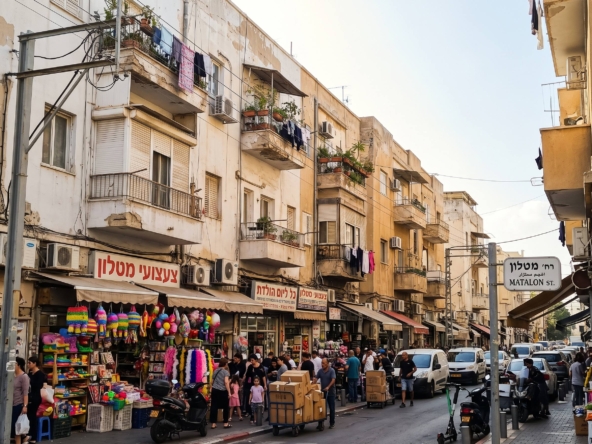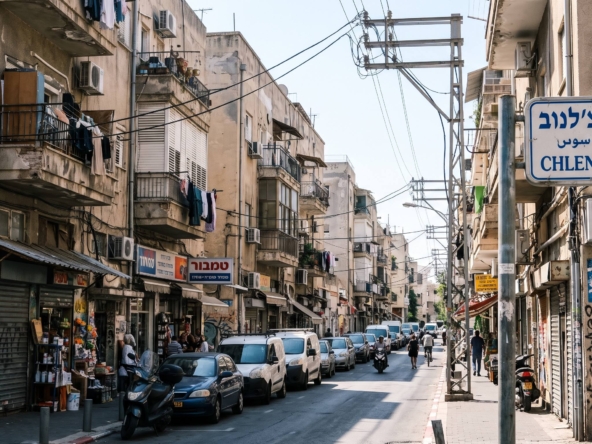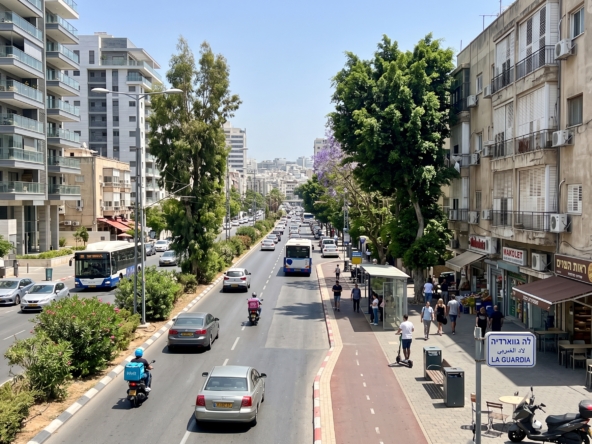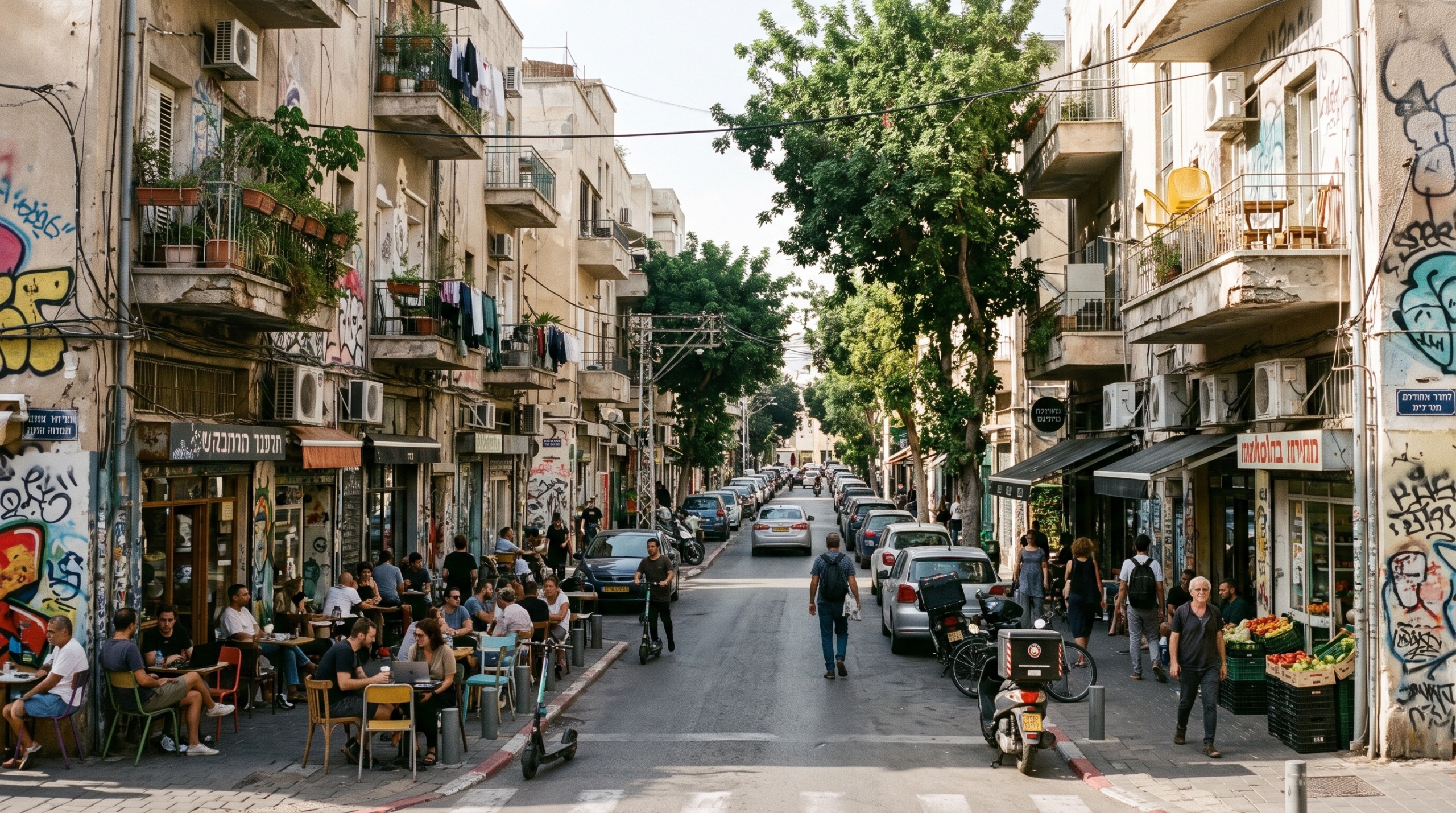
In our ten years of analyzing local property cycles and facilitating high-stakes transactions, we have observed a profound shift along Florentin Street. Moving decisively away from its historical roots as a gritty industrial corridor of carpentry workshops, the avenue has matured into a focal point of urban renewal. We see firsthand how this evolution provides fertile ground for strategic capital, transforming the once-peripheral stretch into a premium urban destination that demands objective analysis.
| At a Glance | |
| Target Demographic | Investors, developers, and affluent tech professionals |
| Area Vibe | Urban, industrial-chic, and highly dynamic |
| Walkability | High |
| Closest Major Landmark | Levinsky Market |
Transformative Infrastructure
Connectivity fundamentally alters real estate market positioning. The Red Line Light Rail at Elifelet station is situated precisely 450 meters away, while the expansive Park HaMesila is a brief 7-minute walk from the core street. Immediate access to high-speed transit networks effectively transitions the buyer pool from hyper-local residents to national strategic investors. This level of infrastructure completely bypasses the historical traffic bottlenecks that previously suppressed localized property values.
Urban Renewal and Property Rights
A steady pipeline of Tama 38 interventions and targeted Pinui Binui (demolition and reconstruction) projects is systematically replacing low-density structures with upscale boutique buildings. For prospective buyers, navigating Tabu registration (land registry) here requires diligence, as historical zoning transitions mean some older manufacturing blocks still lack standardized parceling. Working closely with a competent real estate agent in Israel ensures that all legal frameworks and zoning validations are thoroughly vetted prior to signing any binding agreements.
Demographic Shifts and Premium Positioning
The demographic profile has pivoted dramatically over the last cycle. Where bohemian artists once resided, a new wave of high-earning tech executives, finance professionals, and serial entrepreneurs now anchors the community. This demographic shift introduces stringent demands for premium property specifications, which are evident across several localized factors:
A dramatic surge in demand for units featuring expansive sun terraces and secure subterranean parking facilities.
The seamless integration of smart-home ecosystems and advanced security protocols within new residential complexes.
A distinct pivot from short-term rentals to long-term strategic acquisitions by affluent young families.
The influx of high-income tech professionals has fundamentally shifted development pipelines toward premium finishes and boutique configurations. Finding a real estate agent in Tel Aviv who comprehensively understands this specific transition is crucial for investors. Ranked among the top real estate agencies in Israel, our market analysis confirms that high-end residential units here perform exceptionally well as defensive assets. The barrier to entry has surged, pushing the street into a premium tier characterized by stable demand and constrained inventory.
Architectural Fusion
Unlike neighborhoods strictly dominated by classic Bauhaus architecture, this street champions a refined industrial-chic aesthetic. Modern developments seamlessly blend exposed concrete, double-height ceilings, and expansive glass facades with uncompromising high-end living standards. In-depth analysis reveals that developers are intentionally preserving this gritty visual identity while integrating it into luxury frameworks. Pedestrianization of adjacent corridors solidifies long-term demand by offering a quieter residential experience within a bustling urban core. Any premier realtor in Israel will note that the unique architectural identity here operates as a distinct, highly resilient asset class.
Expert Tip
Accurate measurement (Gross/Pladelet vs. Net/Tabu): It is crucial to emphasize that the Israeli real estate market is priced and operates according to gross area (known as “Pladelet area” – the net apartment area plus walls, excluding shared spaces like stairwells). Most sellers make a terrible mistake and advertise the property based on the Tabu or municipal tax registry, which shows an area significantly smaller than the apartment’s true size! At Concord Real Estate, we physically measure every property in advance to present the true, full size (gross), thereby maximizing the asset’s value for the seller and preventing the loss of buyers who might filter out the apartment on listing boards because they thought it was too small.
Frequently Asked Questions
Does Tabu registration present specific challenges in this neighborhood?
Many older industrial buildings lack modern parceling, which can severely delay registration. However, new developments undergo rigorous legal structuring to ensure proper Tabu rights from the outset, providing full collateral security for mortgage-backed buyers.
How does the ongoing infrastructure development affect positioning?
The operational Red Line Light Rail and pedestrian-friendly parks have transformed the street into a highly connected transit hub, drastically reducing dependency on private vehicles and immediately increasing broad residential appeal.
What is the trajectory for older industrial workshops?
These outdated spaces are rapidly undergoing rezoning and demolition, making way for sophisticated mixed-use boutique developments that combine upscale commercial ground floors with high-end residential units above.
To schedule a consultation, property valuation, or a property tour with Concord Real Estate, led by CEO Guy Gidon (Frishman 21, Tel Aviv), contact us at: +972 50-999-0402.