Yehuda HaMaccabi Street, Tel Aviv: The Premier Residential Axis of the New North
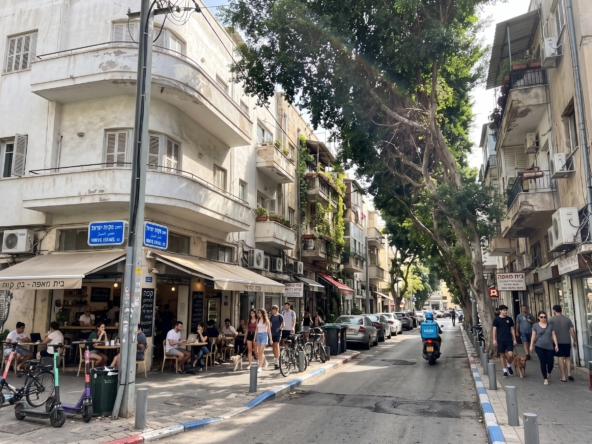
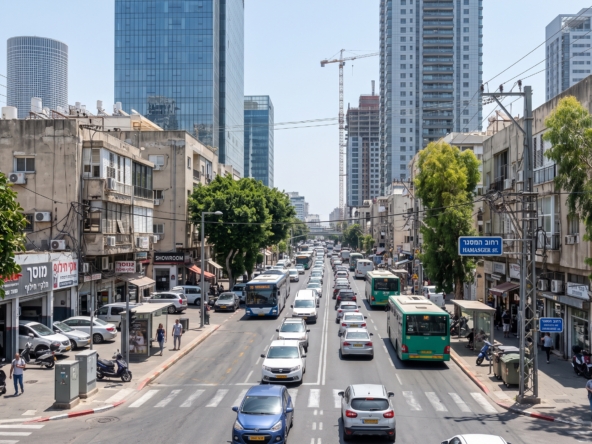
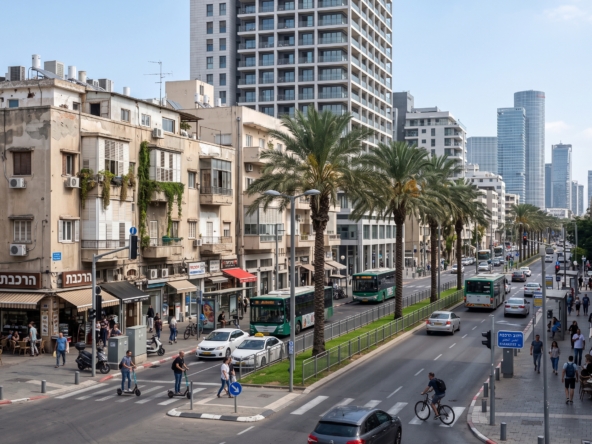
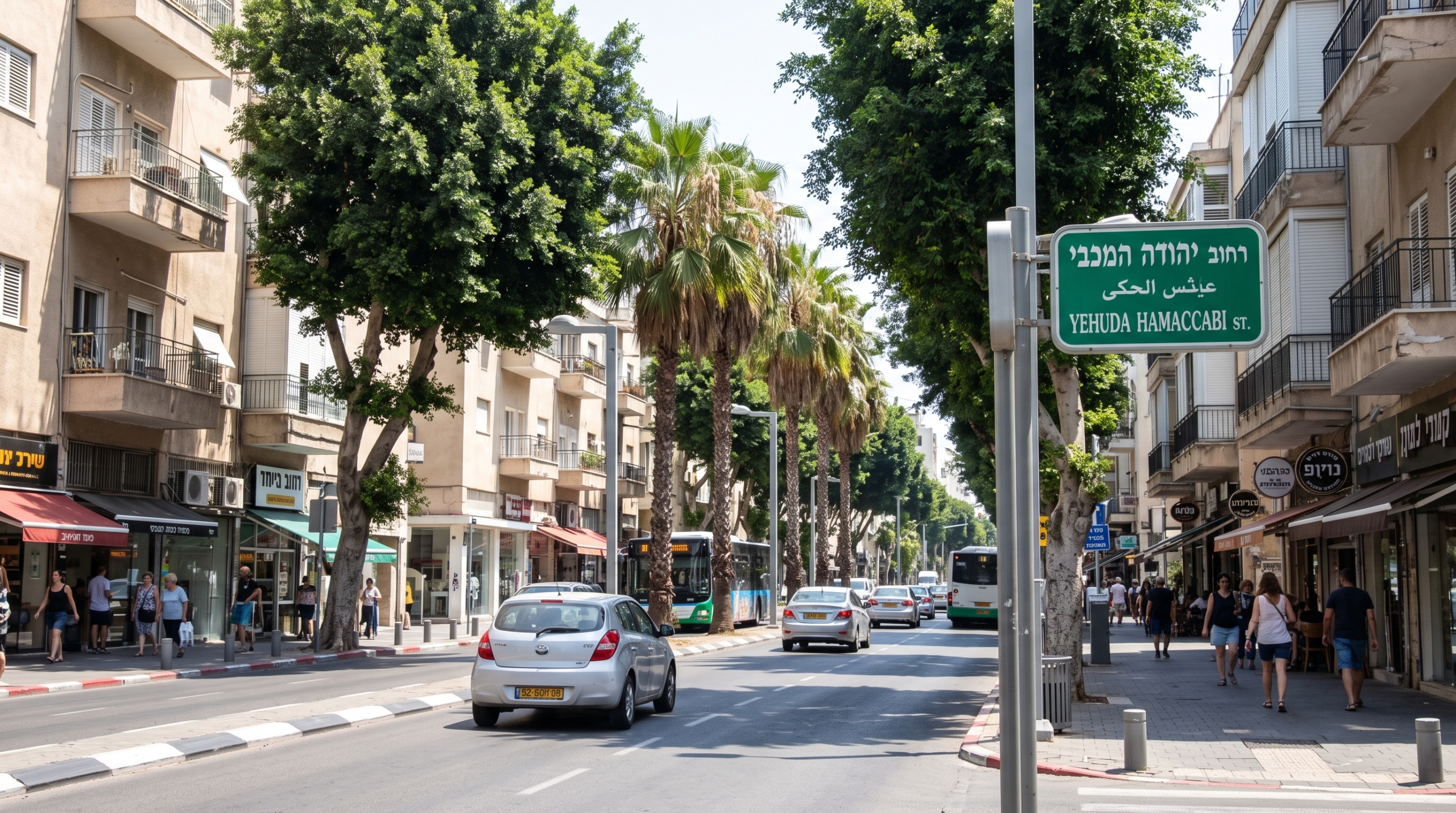
Yehuda HaMaccabi Street serves as the primary commercial and residential artery of Tel Aviv’s New North neighborhood, stretching from Ibn Gabirol Street in the west to Namir Road in the east. Unlike purely residential side streets or overly congested transit corridors, Yehuda HaMaccabi offers a calibrated blend of curated ground-floor retail and mid-rise apartment buildings currently undergoing extensive architectural transformation. For domestic buyers and international investors, the street represents one of the most resilient micro-markets in the city, combining immediate access to expansive green spaces with high-certainty urban renewal frameworks.
The street’s real estate value is anchored by verifiable proximity to major northern Tel Aviv landmarks. The central section of Yehuda HaMaccabi is located just a 4-minute walk—approximately 300 meters north along Weizmann Street or Bnei Dan Street—from the southern lawns and jogging trails of Yarkon Park. Toward its eastern end, the street connects directly into Milano Square, situated a 2-minute walk (150 meters) from the heart of the avenue, serving as a prominent culinary and community hub. At its western boundary, roughly 350 meters (a 5-minute walk) from the center of the street, lies the Ibn Gabirol intersection, which will host an underground and surface transit hub for the upcoming Green Line Light Rail.
Architectural Evolution and the Quarter 4 Urban Renewal Plan
Understanding property dynamics on Yehuda HaMaccabi Street requires examining its historical development. Predominantly built during the 1950s and 1960s as Tel Aviv expanded northward beyond the historic Geddes Plan, the street originally consisted of functional three-to-four-story modernist buildings. These structures typically featured commercial colonnades at street level and spacious apartments with high ceilings above. In the surrounding quiet residential pockets—such as Miriam HaHashmonait, Bodenheimer, Pinkas, and Weizmann streets—tree-lined avenues and mid-century residential blocks established the neighborhood as an affluent, family-oriented enclave.
Over the past decade, the municipal Quarter 4 (Rova 4) zoning plan has systematically reshaped the street’s built environment. By establishing clear building rights for earthquake retrofitting and complete demolition-and-reconstruction projects, the plan catalyzed a wave of high-end boutique developments. Today, seven-to-eight-story modern residential buildings stand alongside classic mid-century structures. These newer projects introduce underground parking solutions, wide sun balconies overlooking either the tree-lined boulevard or quiet rear gardens, designer lobbies, and expansive penthouse units. Working with an experienced real estate agent in Tel Aviv allows buyers to distinguish between older buildings with untapped zoning potential and completed luxury projects offering immediate turnkey living.
Impact of Future Infrastructure and Transit Connectivity
A critical driver of long-term capital appreciation along Yehuda HaMaccabi is the development of surrounding mass transit infrastructure. While neighboring Ibn Gabirol Street has experienced years of disruptive construction along its entire length, Yehuda HaMaccabi benefits from a strategic buffer: it retains its calm, pedestrian-friendly scale without rail tracks running down its center, while capturing the full connectivity value of transit stations situated at its western and eastern perimeters. Once operational, the Green Line Light Rail on Ibn Gabirol will connect residents within minutes to Tel Aviv’s central business districts in the south and the high-tech employment hubs of Ramat HaHayal and Herzliya in the north.
Furthermore, existing commuter rail access near Namir Road and the expanding network of dedicated municipal cycling lanes linking directly to Yarkon Park and the Mediterranean coastline continue to reduce reliance on private vehicles. Any seasoned realtor in Israel will note that properties positioned within a five-minute walk of mass transit nodes—yet insulated from the immediate noise and construction of the transit corridor itself—consistently outperform the broader market in both rental yield stability and resale liquidity.
Demographic Profile of Buyers and Residents
The resident profile on Yehuda HaMaccabi Street and its immediate tributaries is characterized by high socioeconomic stability and long-term tenure. Prospective buyers generally fall into three primary categories:
Affluent Local Families: Upgrading households seeking four-to-five-room apartments within walking distance of top-tier educational institutions near Milano Square and recreational facilities in Yarkon Park. For this group, elevator access, a secure safe room (Mamad), and dedicated parking are non-negotiable prerequisites.
Empty-Nesters and Downsizers: Mature couples relocating from larger single-family homes in northern Tel Aviv neighborhoods across the Yarkon River or suburban towns in the Sharon plain. These buyers target high-specification three-to-four-room units, mini-penthouses, or rooftop apartments that provide effortless urban living with cafes, boutiques, and medical services right downstairs.
Domestic Investors and Foreign Residents: Capital-preservation buyers seeking two-to-three-room apartments in a blue-chip location. When consulting a real estate agent in Israel, international buyers frequently gravitate toward the New North due to its orderly European streetscape, community atmosphere, and consistent demand from high-earning young professionals in the rental market.
Pros and Cons of Living and Investing on Yehuda HaMaccabi Street
Evaluating a property acquisition on this street requires weighing its lifestyle and financial advantages against its inherent urban constraints.
Advantages
Immediate Park Proximity: Being 300 meters from Yarkon Park provides residents with unmatched access to outdoor recreation, sports facilities, and green views in the upper floors.
Self-Contained Neighborhood Ecosystem: The street features a vibrant mix of independent coffee shops, bakeries, supermarkets, pharmacies, and upscale dining, eliminating the need to drive for daily errands.
Blue-Chip Market Resilience: The New North consistently ranks among the most stable real estate sectors in the country, demonstrating strong value retention across market cycles.
Highway Accessibility: Quick vehicular egress to Namir Road and the Ayalon Highway (via Pinkas Street or HaHalacha Bridge) makes commuting outside the city significantly easier than from central or beachfront neighborhoods.
Disadvantages and Challenges
Traffic Congestion and Street Parking Scarcity: As a central neighborhood thoroughfare, the street experiences steady vehicular traffic during peak hours, and finding on-street parking without a private deeded spot is exceedingly difficult.
Street-Facing Acoustic Exposure: Lower-floor apartments facing Yehuda HaMaccabi are subject to bus routes and commercial foot traffic noise, requiring high-grade double or triple-glazed acoustic windows.
Ongoing Urban Renewal Construction: Because Quarter 4 renewal is actively progressing, buyers must carefully vet neighboring parcels to anticipate potential construction noise and dust over a two-to-three-year horizon.
Expert Tip for Buyers and Sellers in Northern Tel Aviv
When evaluating top real estate agencies in Israel, clients look for practical tools that bridge the gap between a property’s current state and its maximum market value. At Concord Real Estate, we utilize a proven visual methodology to solve one of the market’s most common friction points:
3D visualizations for property potential: A critical working tool of ours, especially for older apartments in northern Tel Aviv. We produce photorealistic renderings that show the buyer exactly how the apartment will look after a complete renovation, removing their imagination barrier, and thereby maximizing the property’s value for the seller. Renderings are a critical matter for quite a few apartments that are in poor condition and need a facelift, as well as for new contractor apartments where, when the home is empty without furniture, it is very difficult to see the potential of the property with the right furniture; this is a very simple solution to a very big problem.
Whether marketing a dated 1960s apartment with structural wall constraints or an unfurnished new-build shell, deploying precise architectural renderings allows buyers to make confident, data-backed decisions.
Frequently Asked Questions for Buyers and Investors
How does the value and livability of a front-facing apartment on Yehuda HaMaccabi compare to a rear-facing unit?
Front-facing units enjoy open urban vistas over the tree-lined street and superior natural light exposure, particularly on upper floors. However, they experience higher ambient noise from daytime retail activity and bus transit. Rear-facing apartments typically overlook quiet, green interior courtyards bordering the residential buildings of Miriam HaHashmonait or Bodenheimer streets. Many families and noise-sensitive buyers actively prefer rear-facing units on mid-level floors, whereas penthouse buyers often favor the open skyline views of the front facade where street noise dissipates.
Should an investor purchase an older apartment before urban renewal or buy into a completed boutique building?
The optimal choice depends on your capital timeline and risk tolerance. Acquiring a unit in an unrenovated building with unrealized Quarter 4 zoning rights offers substantial long-term equity upside, but involves timeline uncertainty, neighbor consensus hurdles, and lower rental yields during the interim period. Conversely, purchasing in a completed modern building provides immediate lifestyle utility, modern earthquake safety standards, underground parking, and premium tenant demand without construction delays.
How do robotic and mechanical parking systems in the street’s newer buildings impact property liquidity?
Due to the narrow plot dimensions characteristic of Yehuda HaMaccabi Street, most boutique demolition-and-reconstruction projects cannot accommodate wide ramps for conventional underground parking garages, relying instead on automated robotic parking vaults. While conventional deeded parking remains the gold standard, the northern Tel Aviv market has fully adapted to modern robotic systems. Provided the system is maintained by a reputable service company and accommodates standard SUV dimensions and electric vehicle charging, units with robotic parking maintain high liquidity and strong resale value compared to any property lacking private parking.
To schedule a consultation, property valuation, or a property tour with Concord Real Estate, led by CEO Guy Gidon (Frishman 21, Tel Aviv), contact us at: +972 50-999-0402.