Tchernichovsky Street, Tel Aviv: Core Real Estate Value
Tchernichovsky Street stands as one of the most intriguing and highly sought-after residential corridors in the city center. In stark contrast to heavily commercialized arteries, Tchernichovsky offers a precise balance between quiet residential living and immediate access to the metropolitan hubs of culture, commerce, and leisure. Spanning roughly from the Bograshov area in the north down toward Allenby and the Carmel Market in the south, its geographical footprint generates a diverse array of real estate opportunities for buyers and investors alike. Finding a knowledgeable real estate agent in Israel can help clients navigate the persistent demand for properties in this specific area, which historically maintain their intrinsic value even amidst macroeconomic fluctuations.
Geographical Accessibility and Key Points of Interest
The most prominent advantage of Tchernichovsky Street is its supreme location. The street allows residents to navigate the urban core entirely independent of a private vehicle, a metric that carries immense real estate value in central Tel Aviv. The walking distances to key landmarks are minimal and highly convenient: Access to Meir Park is merely a three-minute walk, approximately two hundred fifty meters from the middle of the street, providing a vast green lung and recreational spaces for families. Dizengoff Center, the primary commercial retail hub of the immediate area, is a six-minute walk, roughly five hundred meters from the northern section of the street. Furthermore, the future Light Rail station along the Purple Line, planned for Allenby Street, is situated about four hundred meters away, translating to a five-minute walk from the southern edge of Tchernichovsky. These concrete spatial metrics solidify the street’s status as a central residential anchor.
Architectural Profile and Market Trends
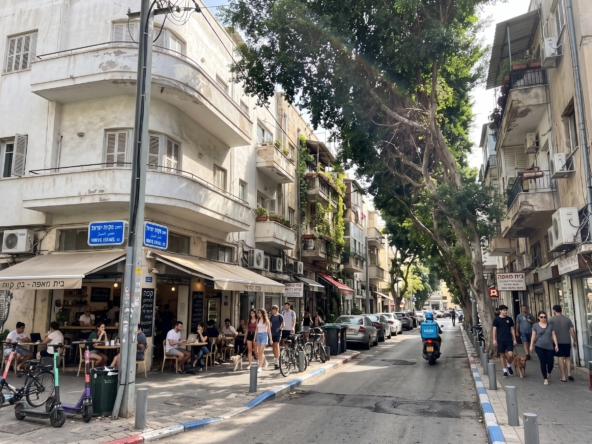
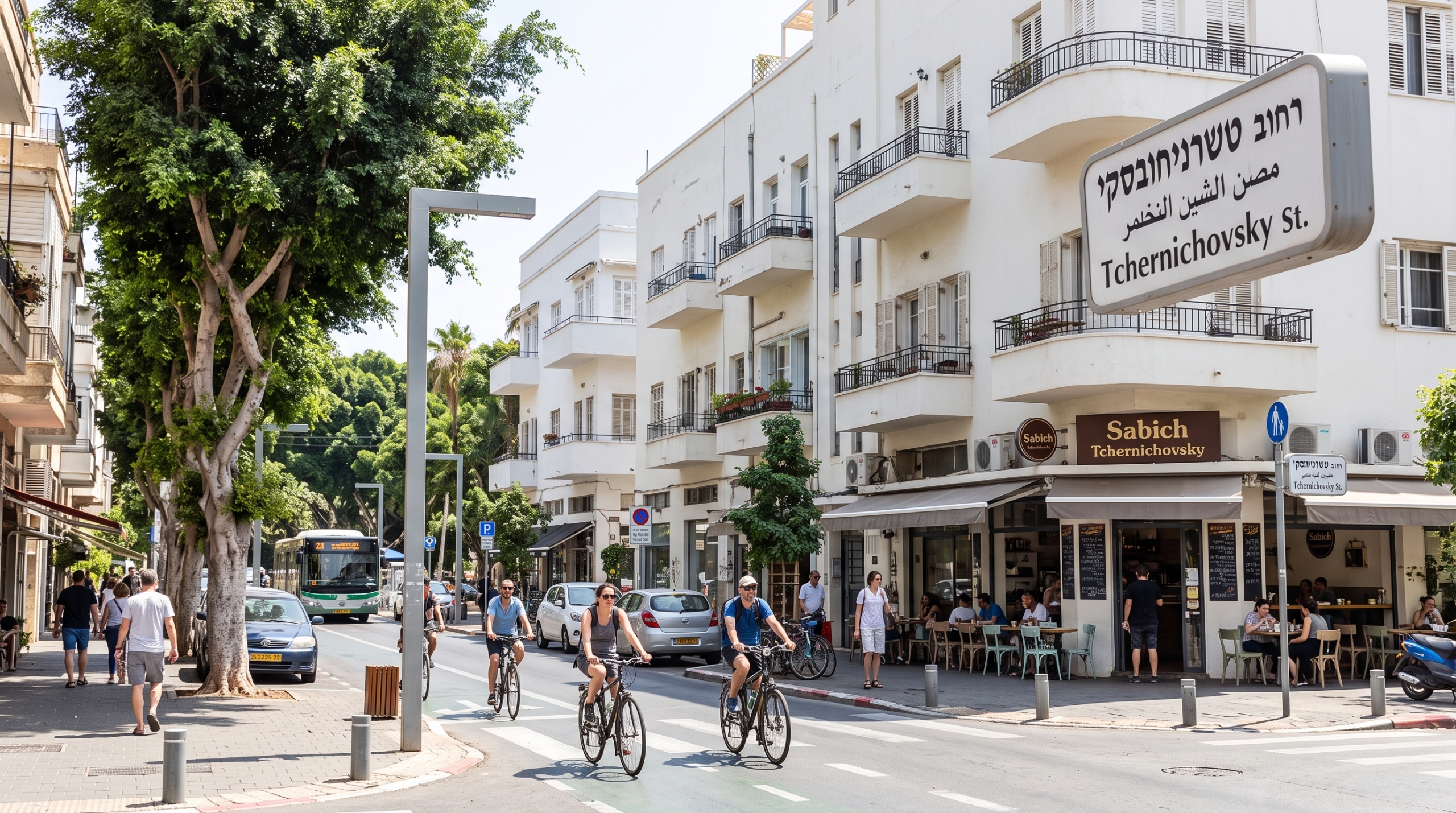
The built environment along Tchernichovsky Street is characterized by an eclectic mix of historical International Style buildings seamlessly standing alongside structures undergoing comprehensive urban renewal. A significant portion of these properties are low-rise boutique buildings, typically three to five stories high, which preserves an intimate neighborhood character. Property owners here are benefiting from a wave of structural reinforcements, vertical additions, and full demolition-and-rebuild projects. These processes upgrade core building infrastructures, add critical amenities such as balconies and elevators, and directly elevate the liquidity and marketability of the apartments. Any dedicated real estate agent in Tel Aviv recognizes that renovated units in upgraded buildings on this street are absorbed by the market rapidly.
Demographic Profile of Buyers and Tenants
The demand for properties on Tchernichovsky originates from several distinct, high-quality demographics. First, established young families and senior technology executives seeking an urban lifestyle close to employment centers and entertainment venues, while maintaining a secure, community-oriented environment. Second, there is a sustained trend of affluent empty-nesters downsizing from large suburban houses into convenient, single-level luxury apartments in the city center.
Another crucial demographic consists of foreign investors and non-residents. For this audience, acquiring a property in a prime location like Tchernichovsky Street represents a stable financial anchor. These investors typically prefer move-in-ready assets or new developments in advanced stages of construction, contributing heavily to the sustained high demand in the area, even during periods of broader market stabilization.
The Impact of Future Infrastructure on Real Estate Values
The ongoing development of mass transit infrastructure in Tel Aviv is currently the most significant value driver in the market. The proximity of Tchernichovsky Street to the Light Rail network, specifically the planned Purple Line stations on Allenby, is expected to transform regional connectivity. Rapid transit access to employment hubs in the eastern metropolis and other key destinations will drastically reduce reliance on private vehicles. Empirical data from neighborhoods situated along the active Red Line demonstrates that properties within short walking distance of operational transit stations experience a surge in demand for both purchasing and leasing. Forward-thinking investors acquiring assets today factor in the embedded potential of these impending infrastructural completions, which are projected to enhance future yields and overall property liquidity.
Pros vs. Cons Analysis for Living and Investing
As with any significant real estate decision, it is imperative to weigh the comprehensive data objectively. Partnering with a top-tier realtor in Israel ensures all variables are analyzed accurately.
Pros:
Strategic Location: A rare combination of a serene residential atmosphere nestled within a pulsating urban environment.
Walkability and Community: Unprecedented pedestrian access to cultural institutions, parks, retail centers, and community services.
Investment Stability: An area benefiting from rigid demand, serving as a secure asset for long-term capital preservation.
Urban Renewal: Substantial betterment potential in older buildings slated for future modernization projects.
Cons:
Parking Constraints: The lack of subterranean parking solutions in older buildings complicates daily commuting via private vehicle. Apartments lacking registered parking require logistical compromises from car owners.
Construction Disturbances: The momentum of urban renewal on the street and its immediate vicinity brings temporary nuisances, including noise, dust, and localized traffic blockages over extended periods.
Professional Insight for Property Sellers
When approaching the sale of a premium asset in such a central location, the marketing strategy must be meticulously tailored to a broad and affluent target audience. International exposure to foreign residents: Active marketing overseas. We advertise our properties on leading international portals to reach an audience of investors, diaspora Jews, and immigrants from the USA, France, and the UK directly, thereby dramatically increasing the competition for the apartment. This client base is particularly important because these are usually more affluent individuals who are also interested, due to the current global situation, in coming to Israel to have a kind of “safety cushion.” This is a very high-quality clientele that the average person in Israel would have a certain difficulty reaching on their own. This comprehensive level of service and proactive global reach is standard practice at Concord Real Estate, recognized among the top real estate agencies in Israel.
Frequently Asked Questions for Investors and Buyers
Do urban renewal projects on the street affect the value of adjacent properties? Absolutely. Renewal processes improve the visual aesthetic of the street, upgrade regional water and electrical infrastructures, and elevate the local standard of living. Although the active construction phase poses a temporary inconvenience, upon completion, neighboring properties also experience an appreciation in value as they are situated in a more cultivated and prestigious environment.
What is the liquidity level of large apartments (four and five rooms) on the street compared to smaller units? While two and three-room apartments enjoy constant and rapid demand from young couples and investors, there is a robust and highly stable demand for larger apartments as well. Established families seeking a viable alternative to suburban living view spacious properties on Tchernichovsky as a rare and desirable commodity, which maintains high liquidity across the entire spectrum of apartment sizes on the street.
How does the parking shortage impact the purchasing decisions of foreign buyers? Many foreign residents strongly prefer purchasing apartments with legally registered parking spaces for absolute convenience and as a strategic investment component. However, for buyers intending to use the property for short periodic stays as an alternative to a hotel, the immediate proximity to public transportation and retail centers frequently diminishes the necessity of an attached vehicle, allowing them greater flexibility in their property selection.
To schedule a consultation, property valuation, or a property tour with Concord Real Estate, led by CEO Guy Gidon (Frishman 21, Tel Aviv), contact us at: +972 50-999-0402.